-

FOI requesting HES data on the treatment of abortion complications in England, 2017 to 2023.
We have published a new report outlining findings from an FOI investigation in which we requested data related to the diagnosis of abortion complications, from all NHS Hospital Trusts in England. Key Points The full report, with links to the FOI responses, can be accessed here.
-

Complications reporting is complicated and incomplete
An effective medical abortion is defined by the MARE Guidelines[i] as a successful expulsion of an intrauterine pregnancy without the need for surgical intervention, clarified by the following sub-categories: So, given the clarity of the above definition, why in the UK do we have official reporting of abortion complication rates ranging from a rare 1-in-3,333…
-
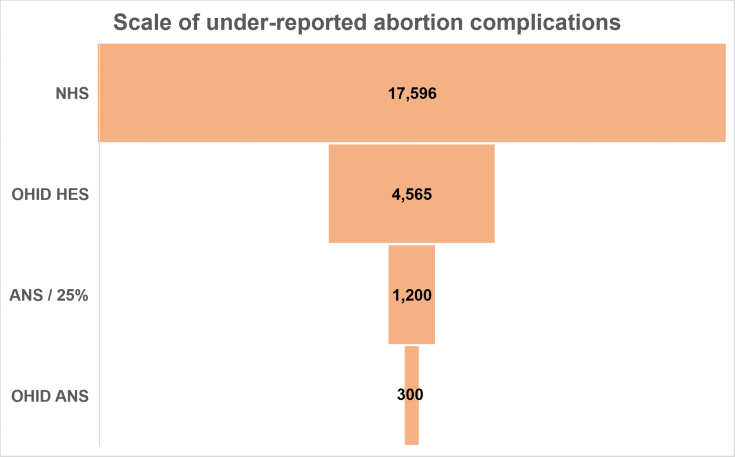
Complications from Medical Abortion are still being under-reported by the UK Government
In its recently published report into abortion statistics for 2022 (England and Wales), the UK Government presented misleading and incomplete data about the numbers of complications arising from medical abortions; and worse still, they knew they were doing so.[i] In fairness to the reporting team at the Office for Health Improvement & Disparities, they do…
-

New Study Reveals FDA Relied on Cherrypicked Data to Approve Dangerous Mail-Order Abortion Drugs
A new peer-reviewed article highlights major flaws in the data used by the U.S. Food and Drug Administration (FDA) to remove medical safeguards and in-person administering of abortion drugs. These flaws illustrate the ongoing problem of lack of quality abortion reporting data in the U.S. as well as in the United Kingdom. In April 2021,…
-
RCOG guidance for later abortions
The Royal College of Obstetricians and Gynaecologists has an e-learning module for abortion providers called ‘Making abortion safe’. In the related ‘Medical abortion from 12 weeks of pregnancy: Summary sheet’, it lays out some of the risks that providers need to be aware of for these later-gestation abortions, including a 1-in-7 risk of needing further…
-
Daily Express
MORE THAN 10,000 women who took a DIY abortion pill at home provided by the NHS in 2020 ended up needing hospital treatment to deal with the side effects, a new study has revealed. The evidence-based on 85 freedom of information requests to NHS trusts revealed that more than 1 in 17 women, around 20…
-
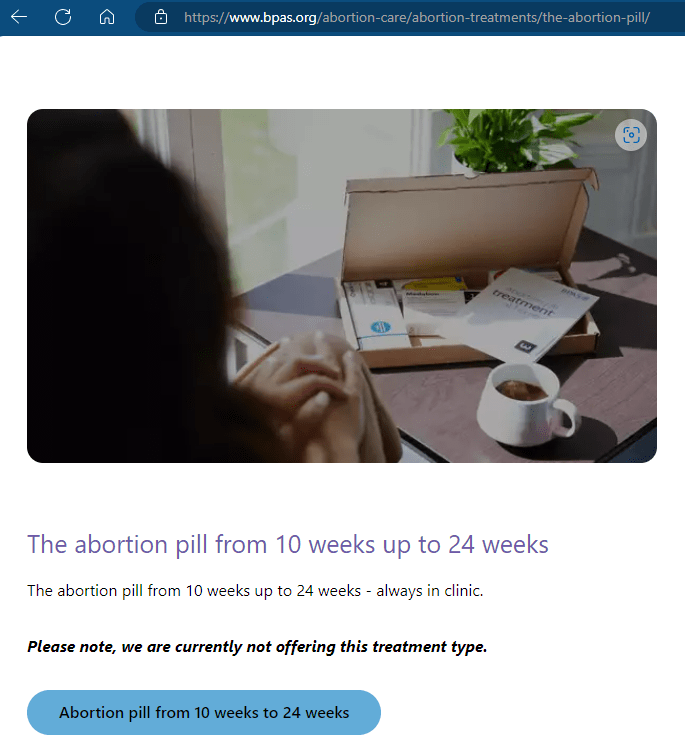
Should DIY abortion be permitted after 10 weeks?
Dame Diana Johnson’s proposed amendment to the Criminal Justice Bill, NC1,[i] seeks to remove women from criminal prosecution if they are found to have self-managed their own abortion. In England and Wales, it is currently legal for a woman to do so through medical abortion until 9-weeks-6-days of pregnancy have elapsed. The equivalent limit is…
-
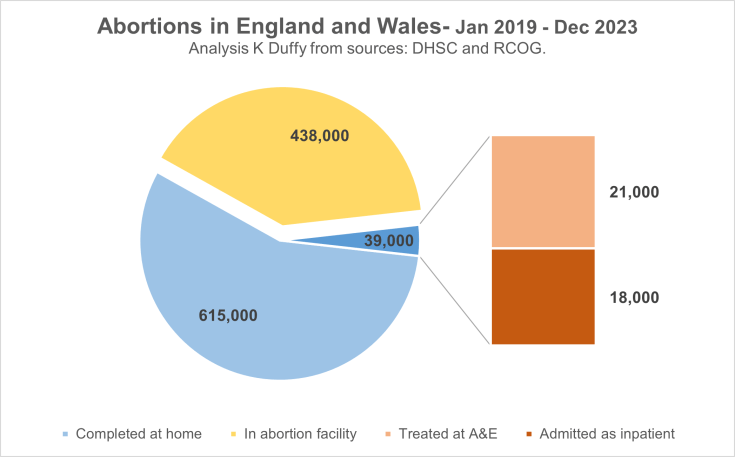
At least 39,000 women treated for DIY abortion complications in five years
In the last five years across England and Wales, at least 39,000 women have been treated at NHS hospitals for complications arising from failed or incomplete DIY medical abortions at home; in the past, these complications would have been treated at the abortion providers’ facilities. Five years ago, abortion was only provided at approved abortion…
-
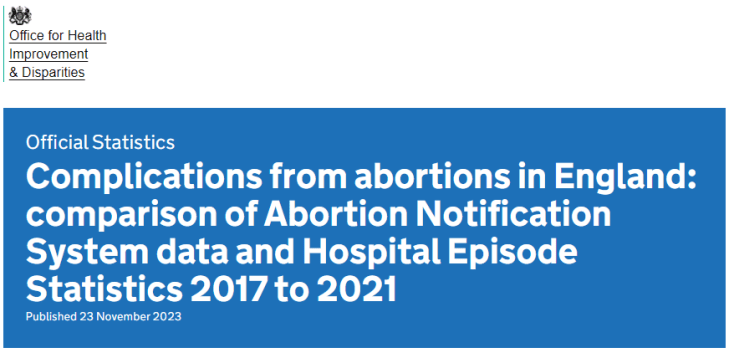
Abortion Complications – new official statistics
On 23 November 2023, the Office for Health Improvement & Disparities (OHID), part of the Department of Health and Social Care (DHSC), published new official statistics reporting the rate of complications arising from abortions in England. Previous reporting from the DHSC relied solely on data gathered from the HSA4 forms that are routinely submitted by…
-
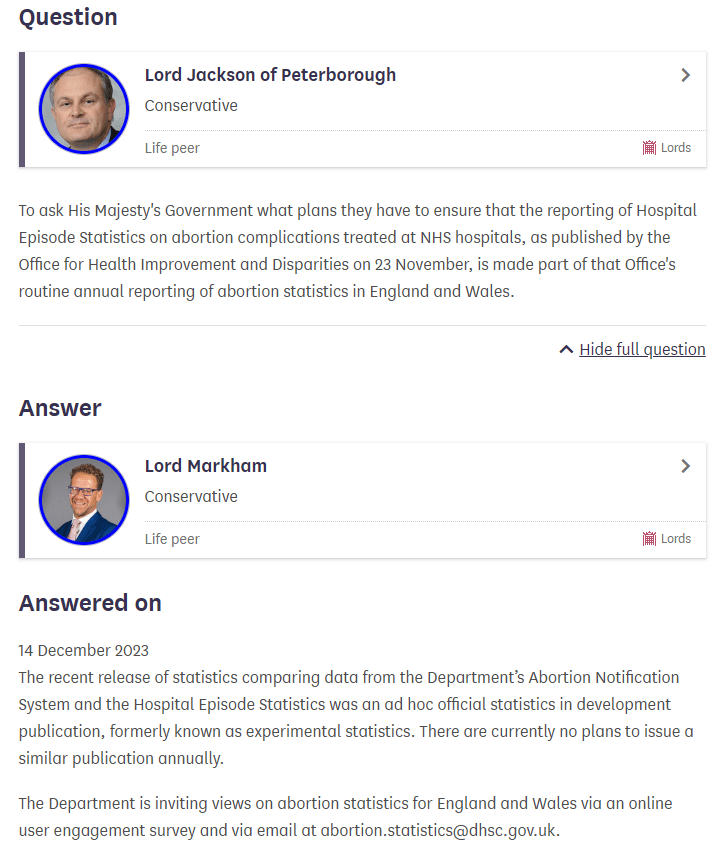
Government has no plans to report on all abortion complications
The Government recently published new statistics showing that many thousands of women are being treated for abortion complications at NHS hospitals. In its report, the Department noted that these complications were not being reported by the independent abortion providers such as BPAS and MSI Reproductive Choices, and yet there are no plans to make this…
