It is not possible on the telephone to ensure a woman’s privacy, to ensure that she is not being coerced. Government stats show that, since 2020, 54,000 people have been admitted to hospital in England for complications from abortion pills. Last year alone, some 12,000—over 6% of women taking such medication—required hospital treatment. To safeguard... Continue Reading →

Was RCOG wrong in its telemedicine guidance to DHSC?

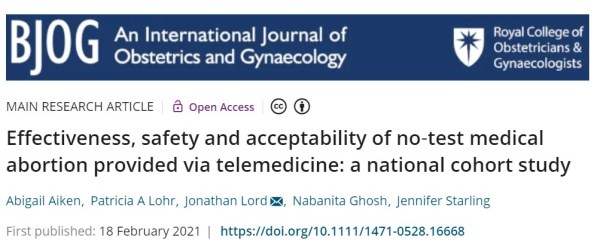
In early 2020, the Royal College of Obstetricians and Gynaecologists issued guidance to support a no-test protocol that was a prerequisite to the government’s approval for telemedicine abortion and pills-by-post. A critical element of this was its advice “that routine pre-abortion ultrasound scanning is unnecessary.” [1] In its published guidance, at section 2.1.1: ‘Gestation assessment’,... Continue Reading →

MORE THAN 10,000 women who took a DIY abortion pill at home provided by the NHS in 2020 ended up needing hospital treatment to deal with the side effects, a new study has revealed. The evidence-based on 85 freedom of information requests to NHS trusts revealed that more than 1 in 17 women, around 20... Continue Reading →

ADF UK cited this on 01 Dec 23: A recent investigation found that 1 in 17 women – around 20 a day – who used the pills by post service in 2020 to administer their own abortions at home, had to present at hospital as a result.

"With most abortions in England and Wales now performed by women at home, pro-life advocate Kevin Duffy fears for the health and wellbeing of the estimated 25 a day who suffer failed abortions."

Less Than 1-in-5 Complications are Reported.

Did you know that the Government and Abortion Providers routinely under report the rate of complications caused by abortion pills? Our freedom of information investigation reveals that less than 1-in-5 complications are being reported. DHSC Under Report. The official DHSC statistics for 2020 show a 1.1% complication rate for all medical abortions and only 0.3%... Continue Reading →

In its SmPC (summaries of product characteristics), Ranbaxy states that there is a non-negligible risk of medical abortion treatment failure, as follows: The non-negligible risk of failure, which occurs in 4.5 to 7.8% of the cases, makes the follow-up visit mandatory in order to check that abortion is complete. The patient should be informed that... Continue Reading →

Emergency Calls Double. Surge in 999 calls over at home abortions after NHS controversially started sending powerful pills by post. There is a worrying development, emergency call-outs related to the abortion pills have *doubled* in some regions.

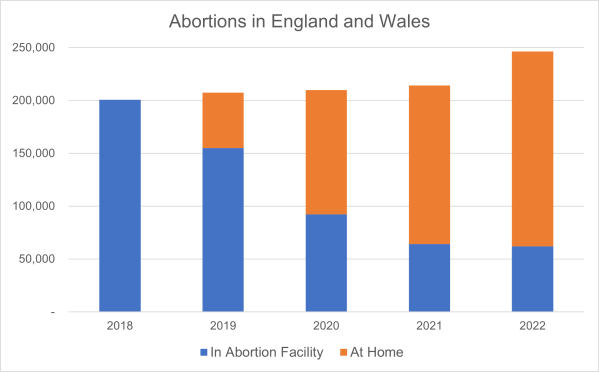
One day this month, we will reach these numbers: 🏘️200,000 women taking the abortion pills at home, since Government approval on 30 March 2020; 🏥10,000 of these women being treated in hospital for complications arising from taking the abortion pills. #EndImmediately

Scottish government to assess DIY abortion

The Scottish Government received 5,537 responses to its consultation asking whether its temporary approval for abortion at home by telemedicine should be made permanent or if it would be better to revert to the prior, clinic-based arrangements that were in place before the end of March 2020. Respondents were asked to comment on how this temporary approval... Continue Reading →

A freedom of information request to Betsi Cadwaladr University Health Board showed the cost of the pills-by-post service provided by BPAS in 2020 was £76.97 for the consultation, and £344.80 for the abortion treatment, a total of £421.77.

Posting is not the same as dispensing.

If you are going to use reduced waiting times to substantiate your preference for telemedicine abortion, then you need to make sure that you are comparing like-for-like. It is wrong to compare the elapsed time from first contact to in-clinic dispensing, with the time from first contact to posting the abortion pills; posting is not... Continue Reading →

Create a website or blog at WordPress.com

Up ↑