An effective medical abortion is defined by the MARE Guidelines[i] as a successful expulsion of an intrauterine pregnancy without the need for surgical intervention, clarified by the following sub-categories: Continuing pregnancy: treated with surgical management Continuing pregnancy: patient opted to continue or outcome is unknown Retained products treated with surgical management (an evacuation of retained... Continue Reading →
Post-Dobbs: Use of online abortion pills increasing.
Research published by abortion activists indicates that women in the USA are making more than 6,000 requests each month for online abortion pills to be self-administered at home. This is an increase of more than 3,900 per month since the Dobbs ruling. Researchers Aiken, Starling et al measured the number of online requests for abortion... Continue Reading →
Less Than 1-in-5 Complications are Reported.
Did you know that the Government and Abortion Providers routinely under report the rate of complications caused by abortion pills? Our freedom of information investigation reveals that less than 1-in-5 complications are being reported. DHSC Under Report. The official DHSC statistics for 2020 show a 1.1% complication rate for all medical abortions and only 0.3%... Continue Reading →
How ‘DIY’ home abortion is placing women at risk.
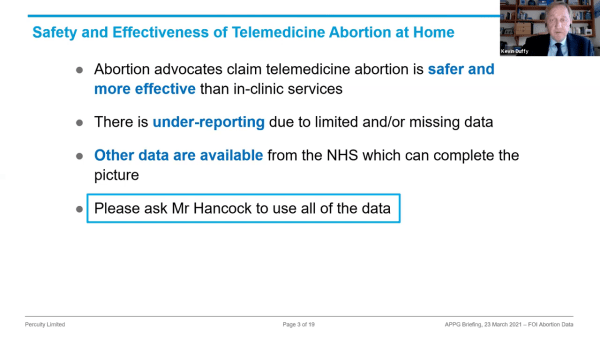
On 23 March 2021, I presented at an online briefing hosted by the All-Party Parliamentary Pro-Life Group for MPs from across the UK, along with politicians from the Scottish Parliament and Welsh Senedd. This was an opportunity to share some of the findings from our recent freedom of information investigation. Led by Co-Chair of the... Continue Reading →
Posting is not the same as dispensing.
If you are going to use reduced waiting times to substantiate your preference for telemedicine abortion, then you need to make sure that you are comparing like-for-like. It is wrong to compare the elapsed time from first contact to in-clinic dispensing, with the time from first contact to posting the abortion pills; posting is not... Continue Reading →
Listen to the all of the data, not just some of it.
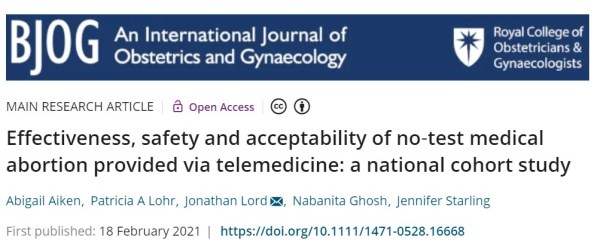
The Royal College of Obstetricians and Gynaecologists (RCOG) is promoting a new cohort study into the safety, efficacy, and acceptability of telemedicine early medical abortion by Aiken et al. published in BJOG here. RCOG lauds this as the largest data study into telemedicine abortion, whilst the authors caution that there are gaps and possible inconsistencies... Continue Reading →