It is not possible on the telephone to ensure a woman’s privacy, to ensure that she is not being coerced. Government stats show that, since 2020, 54,000 people have been admitted to hospital in England for complications from abortion pills. Last year alone, some 12,000—over 6% of women taking such medication—required hospital treatment. To safeguard... Continue Reading →

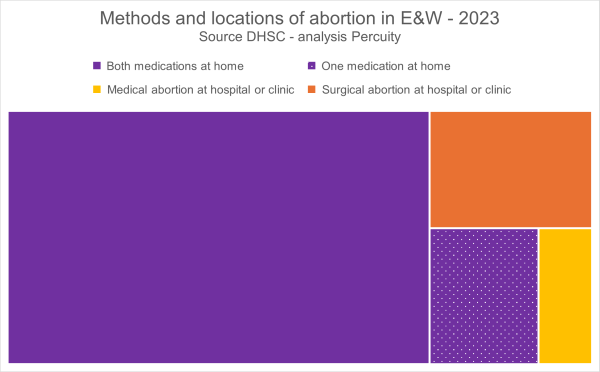
Research organisation Percuity reported that, according to the NHS data, 1-in-17 women who had an abortion at home required hospital care for complications including incomplete abortions, infections, and excessive haemorrhages.

“The government is fully aware of the numbers of women being admitted to hospital for treatment of abortion complications but for some reason seems unwilling to report these on an annual basis,” Duffy wrote. He called for greater transparency and accountability, arguing, “Deliberately minimising and misleading women about the reality of these risks is no... Continue Reading →

Duffy's NHS England analysis of hospitalizations for treatment of abortion complications, a rate of 1-in-17, reflects concerns raised by many in the United States regarding an increase in women visiting emergency departments after REMS safety regulations were weakened by the Food and Drug Administration (FDA) under the Biden-Harris administration. Biden's FDA also removed in-person dispensing... Continue Reading →

Baroness Monckton of Dallington Forest, speaking during the Second Reading of the Crime and Policing Bill on 16 October 2025... Recent figures show that 54,000 women were admitted to NHS hospitals in England for the treatment of complications arising from the use of such abortion pills—a 50% rise from the figures before the pandemic. Analysis... Continue Reading →

54,000 Hospitalized in UK After Injuries From Abortion Pills... Campaigners argue that women cannot give informed consent if the risks are downplayed, and that deliberately minimising these dangers is unacceptable.

Call to allow at-home abortions up to 12 weeks GA

Heidi Stewart, chief executive of the British Pregnancy Advisory Service (BPAS), is urging Parliament to update abortion law to allow women to self-administer medical abortions at home throughout the entire first trimester—raising the current legal limit from 9 weeks and 6 days to 11 weeks and 6 days. She cites a recent study from Scotland,... Continue Reading →

Growing concerns over abortion pill safety on both sides of the Atlantic... Kevin Duffy has raised alarm over the findings that recent NHS figures reveal around 1,000 women each month require emergency care after experiencing issues linked to medical abortions.

The abortion pill harms women

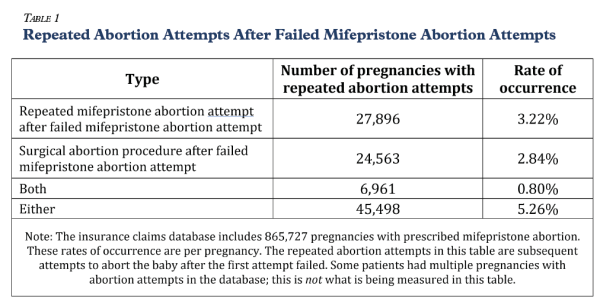
On 28 April 2025, the Ethics and Public Policy Center (EPPC) published the largest-known study into complications arising from the use of the abortion pills.[i] Jamie Bryan Hall and Ryan T. Anderson, analysed data from a U.S. insurance claims database that included 865,727 patient cases in which mifepristone had been prescribed for an induced medical... Continue Reading →

Packer was let down by Lord and his team

On 08 May 2025, Nicola Packer, who was arrested on suspicion of an illegal abortion in November 2020, was cleared by the jury at Isleworth Crown Court. Her case is already being used as a cause célèbre by those campaigning for the decriminalisation of abortion, chief amongst them Jonathan Lord, an NHS consultant gynaecologist and... Continue Reading →

11,000 not 300

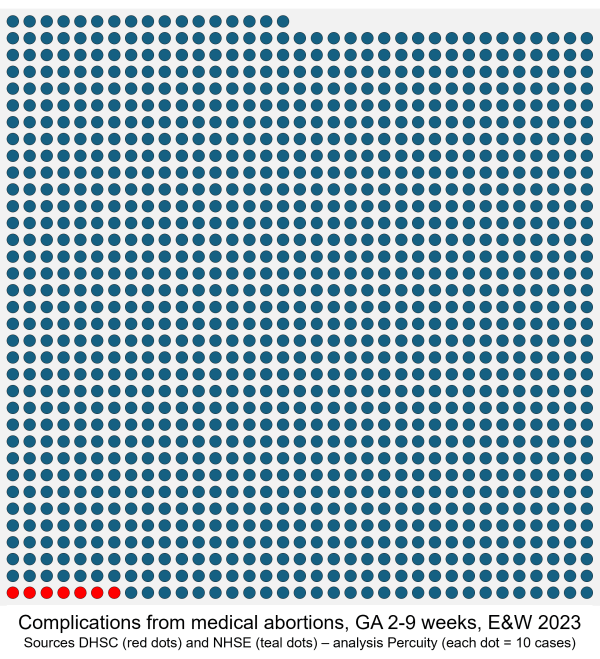
In 2022, the most recent year for which we have official reporting of abortion statistics for England, more than 11,000 women were admitted and treated at an NHS hospital for complications arising from a medical abortion;[i] this represents about 6% of those women using mifepristone and misoprostol at home, or misoprostol at home after taking... Continue Reading →

Saying “Sorry”

Providers of regulated healthcare are obliged by law to say “Sorry” to patients when something goes wrong. The Care Quality Commission (CQC) details this in its Regulation 20: Duty of Candour. This post examines whether it is possible that BPAS failed to meet this statutory requirement in at least 5,000 cases during the last year.... Continue Reading →

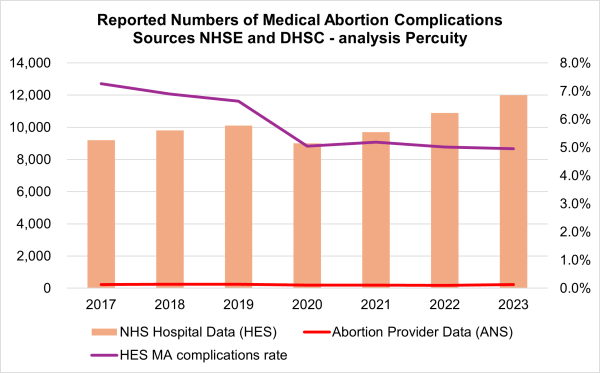
Government under-reports abortion complications by a factor of 38x

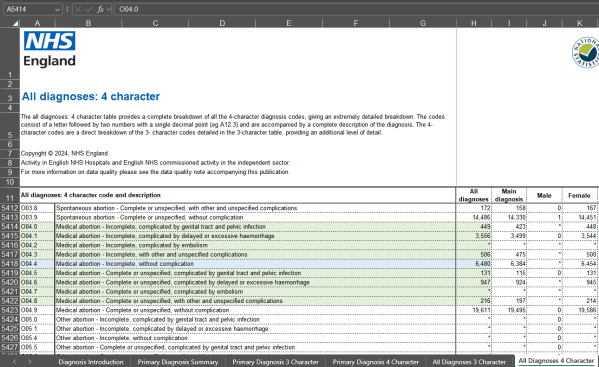
In 2022, official reporting of abortion complications by the Office for Health Improvement and Disparities (OHID) shows just 300 cases across England and Wales. For the year 2022-23, official data from NHS England show 11,256 women diagnosed with abortion complications at an NHS hospital. The NHS data are known to the OHID, as evidenced in its November 2023 report which compares these two data sources, Abortion Notification System (ANS) and Hospital Episode Statistics (HES), and yet government officials refuse to make any change to official annual reporting. The NHS England data are easily accessible by any interested person and the above 11,256 can be retrieved online from NHS Digital in a matter of minutes. No prolonged data compilation, cleaning, and analysis; no need for a Freedom of Information request.
Complications reporting is complicated and incomplete

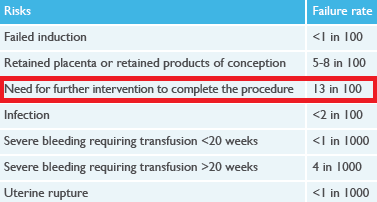
An effective medical abortion is defined by the MARE Guidelines[i] as a successful expulsion of an intrauterine pregnancy without the need for surgical intervention, clarified by the following sub-categories: Continuing pregnancy: treated with surgical management Continuing pregnancy: patient opted to continue or outcome is unknown Retained products treated with surgical management (an evacuation of retained... Continue Reading →

Create a website or blog at WordPress.com

Up ↑