Complications reporting is complicated and incomplete

An effective medical abortion is defined by the MARE Guidelines[i] as a successful expulsion of an intrauterine pregnancy without the need for surgical intervention, clarified by the following sub-categories: Continuing pregnancy: treated with surgical management Continuing pregnancy: patient opted to continue or outcome is unknown Retained products treated with surgical management (an evacuation of retained... Continue Reading →

Was RCOG wrong in its telemedicine guidance to DHSC?

In early 2020, the Royal College of Obstetricians and Gynaecologists issued guidance to support a no-test protocol that was a prerequisite to the government’s approval for telemedicine abortion and pills-by-post. A critical element of this was its advice “that routine pre-abortion ultrasound scanning is unnecessary.” [1] In its published guidance, at section 2.1.1: ‘Gestation assessment’,... Continue Reading →

RCOG guidance for later abortions

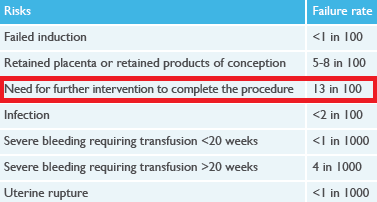
The Royal College of Obstetricians and Gynaecologists has an e-learning module for abortion providers called ‘Making abortion safe’. In the related ‘Medical abortion from 12 weeks of pregnancy: Summary sheet’, it lays out some of the risks that providers need to be aware of for these later-gestation abortions, including a 1-in-7 risk of needing further... Continue Reading →

BPAS case studies undermine its own campaign

In its campaign to decriminalise abortion, BPAS is using the stories of women who have been prosecuted or investigated to tug at our heartstrings and using emotive language to bring us and our MPs onside with their support for the Criminal Justice Bill abortion decriminalisation amendments tabled by Dame Diana Johnson (NC1) and Stella Creasy... Continue Reading →

Compassion not judgement

Dr Jonathan Lord, medical director at MSI Reproductive Choices, reports to The Guardian that he is aware of up to 30 “deeply traumatic” cases where women have been investigated by the police, after being accused of managing their own illegal abortion, with some suffering “life-changing harm”. For me, there is little doubt that these heart-rending... Continue Reading →

Kevin Duffy, former global director of clinics development at MSI, said the organisation was among those letting “women obtain pills-by-post” despite the dangers of an “incomplete abortion” requiring medical help. Writing on X, formerly Twitter, he said Dr Lord’s “perceived ‘problem’ of an increasing number of prosecutions is one of his own making and could... Continue Reading →

“Don’t Ask, Don’t Tell”

The Guardian, asking about what might be causing the recent increase in prosecution cases being brought against women suspected of an illegal abortion, says “it’s fair to say no one really knows for sure why…” and then in the very next part of the same sentence says, “the increased use of pills obtained to do... Continue Reading →

RCOG warns medics not to report illegal abortions

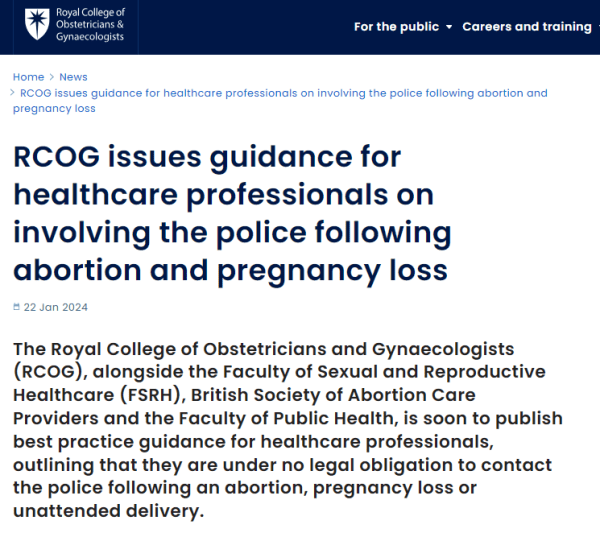
Dr Jonathan Lord, medical director for MSI Reproductive Choices, speaking on behalf of the Royal College of Obstetricians and Gynaecologists, warns doctors that they must not report to the police any woman suspected of an illegal abortion. He said that new guidance will state that a healthcare worker must "justify" any disclosure of patient data... Continue Reading →

Abortion complications massively under-reported

Abortion providers are massively under-reporting the incidence of complications arising from incomplete medical abortions. They also under-state the risk of an incomplete abortion when consenting women for this procedure. Thankfully, Lord Jackson has questioned the Government about this critical issue and is holding the Department for Health and Social Care (DHSC) to account to ensure... Continue Reading →

Less Than 1-in-5 Complications are Reported.

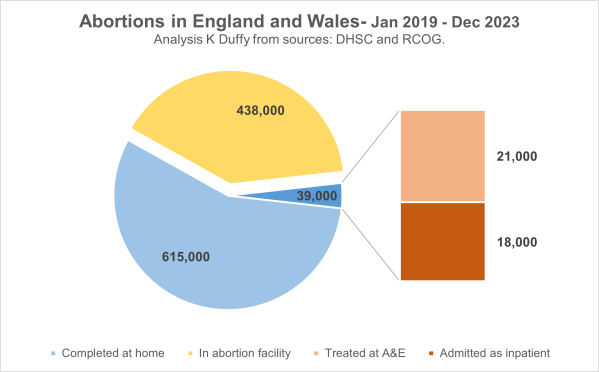
Did you know that the Government and Abortion Providers routinely under report the rate of complications caused by abortion pills? Our freedom of information investigation reveals that less than 1-in-5 complications are being reported. DHSC Under Report. The official DHSC statistics for 2020 show a 1.1% complication rate for all medical abortions and only 0.3%... Continue Reading →

Posting is not the same as dispensing.

If you are going to use reduced waiting times to substantiate your preference for telemedicine abortion, then you need to make sure that you are comparing like-for-like. It is wrong to compare the elapsed time from first contact to in-clinic dispensing, with the time from first contact to posting the abortion pills; posting is not... Continue Reading →

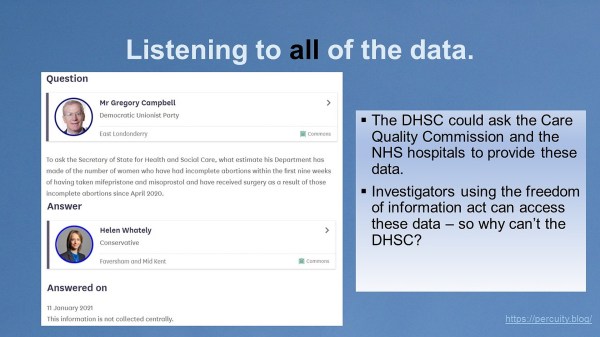
Listen to the all of the data, not just some of it.

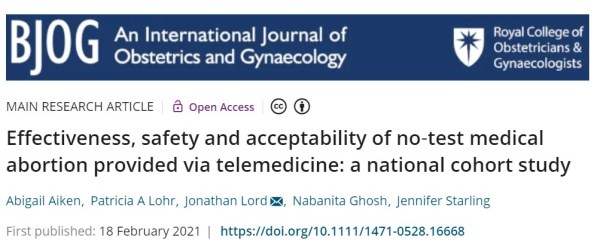
The Royal College of Obstetricians and Gynaecologists (RCOG) is promoting a new cohort study into the safety, efficacy, and acceptability of telemedicine early medical abortion by Aiken et al. published in BJOG here. RCOG lauds this as the largest data study into telemedicine abortion, whilst the authors caution that there are gaps and possible inconsistencies... Continue Reading →

Is the rate of abortion complications falling?

Official government data shows that each year, over 300 women suffer complications from abortion. Statistics from the Department of Health and Social Care for the last five years, shows that each year, 313 women who have an abortion in England and Wales, suffer from complications requiring hospital treatment, including haemorrhage, sepsis, and uterine perforations. This... Continue Reading →

RSOP12: Information for Women.

In the UK, providers of abortion services must comply with the Required Standard Operating Procedures (“the RSOPs”) set out in this document issued by the Department of Health and Social Care. RSOP12 details the information which must be provided to the woman, and how: Women must be given impartial, accurate and evidence-based information (verbal and written)... Continue Reading →

Create a website or blog at WordPress.com

Up ↑