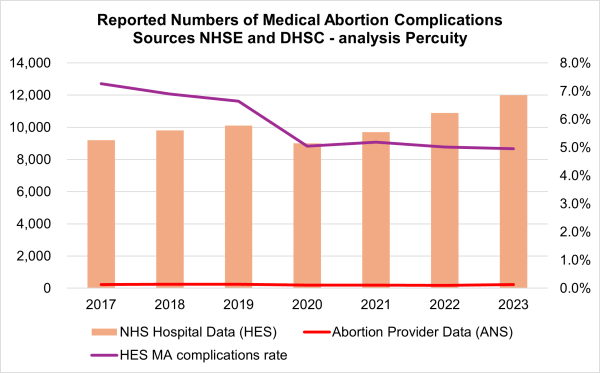
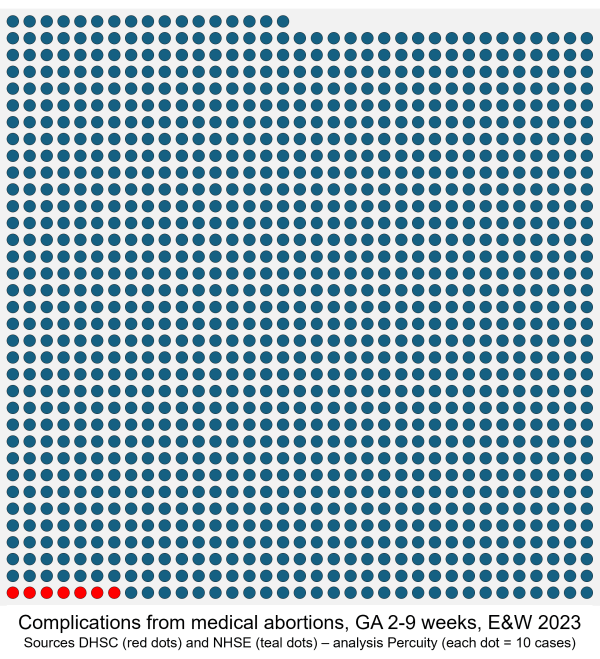
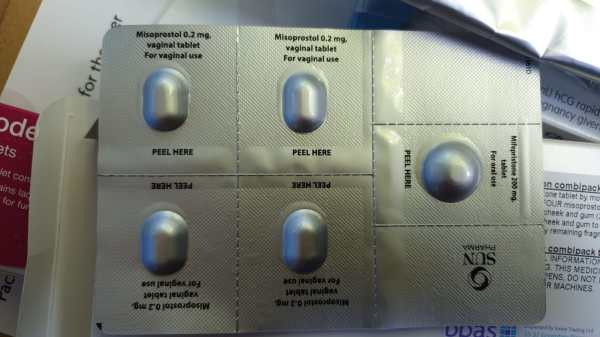
Research organisation Percuity reported that, according to the NHS data, 1-in-17 women who had an abortion at home required hospital care for complications including incomplete abortions, infections, and excessive haemorrhages.
Duffy's NHS England analysis of hospitalizations for treatment of abortion complications, a rate of 1-in-17, reflects concerns raised by many in the United States regarding an increase in women visiting emergency departments after REMS safety regulations were weakened by the Food and Drug Administration (FDA) under the Biden-Harris administration. Biden's FDA also removed in-person dispensing... Continue Reading →
Live Action
54,000 Hospitalized in UK After Injuries From Abortion Pills... Campaigners argue that women cannot give informed consent if the risks are downplayed, and that deliberately minimising these dangers is unacceptable.
Life News
Abortion Pill Reversal is a science based, case proven, reproductive healthcare that we can all be pro-choice about. An informative and interesting chat between @DermotKearney3 and @McAvoyDawn – well worth listening to, especially if you are involved in crisis pregnancy work. https://twitter.com/KevinDTweets/status/1976346837801107585
Call to allow at-home abortions up to 12 weeks GA
Heidi Stewart, chief executive of the British Pregnancy Advisory Service (BPAS), is urging Parliament to update abortion law to allow women to self-administer medical abortions at home throughout the entire first trimester—raising the current legal limit from 9 weeks and 6 days to 11 weeks and 6 days. She cites a recent study from Scotland,... Continue Reading →
The abortion pill harms women
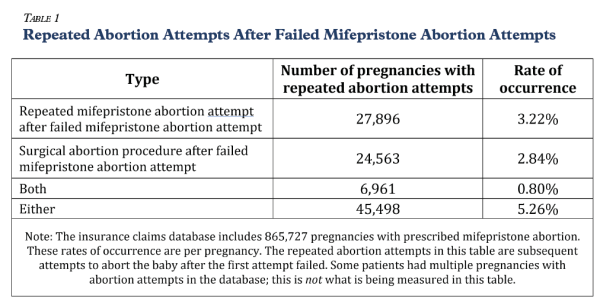
On 28 April 2025, the Ethics and Public Policy Center (EPPC) published the largest-known study into complications arising from the use of the abortion pills.[i] Jamie Bryan Hall and Ryan T. Anderson, analysed data from a U.S. insurance claims database that included 865,727 patient cases in which mifepristone had been prescribed for an induced medical... Continue Reading →
Packer was let down by Lord and his team
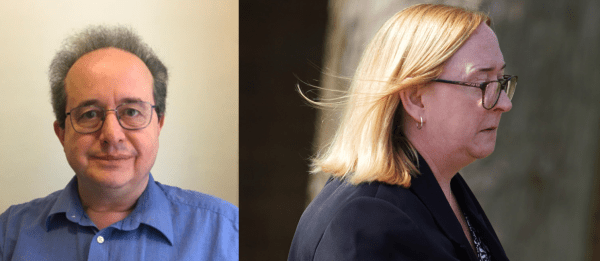
On 08 May 2025, Nicola Packer, who was arrested on suspicion of an illegal abortion in November 2020, was cleared by the jury at Isleworth Crown Court. Her case is already being used as a cause célèbre by those campaigning for the decriminalisation of abortion, chief amongst them Jonathan Lord, an NHS consultant gynaecologist and... Continue Reading →
11,000 not 300
In 2022, the most recent year for which we have official reporting of abortion statistics for England, more than 11,000 women were admitted and treated at an NHS hospital for complications arising from a medical abortion;[i] this represents about 6% of those women using mifepristone and misoprostol at home, or misoprostol at home after taking... Continue Reading →
RCOG guidance for later abortions
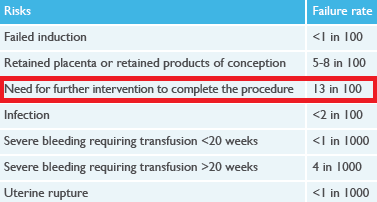
The Royal College of Obstetricians and Gynaecologists has an e-learning module for abortion providers called ‘Making abortion safe’. In the related ‘Medical abortion from 12 weeks of pregnancy: Summary sheet’, it lays out some of the risks that providers need to be aware of for these later-gestation abortions, including a 1-in-7 risk of needing further... Continue Reading →
Prosecutions for illegal abortion
Between 2012 and 2022, four women in England were convicted for committing an illegal abortion. In 2023, Carla Foster was jailed and then had her sentence halved and suspended. In December 2022, the case against a woman in Oxford was dropped and the case against Bethany Cox was dropped in January 2024. There are two... Continue Reading →
Johnson’s Six represent 0.00015%
Those campaigning for Dame Diana Johnson’s amendment NC1, are cynically using the stories of six vulnerable women who have been brought to court, charged with having committed their own illegal abortion. The stories are tragic and we can all acknowledge the harm suffered by these women – the last thing they need now, is to... Continue Reading →
Should DIY abortion be permitted after 10 weeks?
Dame Diana Johnson’s proposed amendment to the Criminal Justice Bill, NC1,[i] seeks to remove women from criminal prosecution if they are found to have self-managed their own abortion. In England and Wales, it is currently legal for a woman to do so through medical abortion until 9-weeks-6-days of pregnancy have elapsed. The equivalent limit is... Continue Reading →
Abortion decriminalisation amendments withdrawn – for now
On Thursday 25 January, the Criminal Justice Bill Committee debated and then withdrew the proposed amendments NC1 and NC2, tabled by Dame Diana Johnson MP and Stella Creasy MP, respectively. Noting that abortion is a very sensitive and incredibly important issue, committee members agreed not to vote on the amendments but rather to leave the... Continue Reading →
Redefining DIY abortion effectiveness to include a failure rate of 10%.
Abortion activists in the US are rushing to promote a new study that claims DIY medication abortion at home is safe and effective after 9 weeks gestational age, minimising or even ignoring the observed 10% failure rate and the recognised harm to women. The study by Moseson et al. was published in Obstetrics & Gynecology... Continue Reading →
Post-Dobbs: Use of online abortion pills increasing.
Research published by abortion activists indicates that women in the USA are making more than 6,000 requests each month for online abortion pills to be self-administered at home. This is an increase of more than 3,900 per month since the Dobbs ruling. Researchers Aiken, Starling et al measured the number of online requests for abortion... Continue Reading →
Abortion numbers nine-months after Dobbs.
In the US, in the nine months following Dobbs, there have been 81,000 less abortions in those States that have enacted life-affirming laws limiting access to abortion; that’s about 9,000 less per month. Of course, many women have been able to travel to access abortion in other States where these laws are not in force,... Continue Reading →
Abortion totals in USA drop by 32,000 in six months.
A new report in the USA shows how the Dobbs decision last year, led to 32,000 less abortions in the following six months. Average monthly abortion totals have fallen by about 6% and are now back to the levels reported in 2020, reversing a multi-year increasing trend. #WeCount is a national abortion reporting effort that... Continue Reading →
This is ideology not evidence.
“…misoprostol, can be safely and effectively used on its own.” That’s what MSI Reproductive Choices is telling the public about a medical abortion treatment known to fail once in every five cases. This statement follows a similar one by Dr Grossman, a leading abortion researcher and advocate in the U.S., “What do people need to... Continue Reading →
The Abortion Pill is not always effective.
Medical Abortion (MA), aka the abortion pill, doesn’t always work; it is well-established that MA has an expected and commonly occurring treatment failure rate of about 5%. Meaning that as many as 1-in-20 pregnant women using abortion pills will subsequently need additional medical treatment for complications arising from an incomplete abortion. Medical abortion treatment failure... Continue Reading →
25,000 Reasons Why 95% is Not Good Enough.
New York Times review Research shows that the abortion pill fails in 5% of cases – that’s the findings from a New York Times review of 101 studies covering 124,000 first trimester abortions performed in 26 countries over the last 30 years. Non-negligible risk of failure. It is well-known that medical abortion will sometimes fail,... Continue Reading →