-

Emergency Ambulance Responses Three Times Higher for Pills-by-Post.
Data obtained from five NHS Ambulance Trusts in England, show that emergency ambulance responses for complications arising after a medical abortion are three times higher for women using pills-by-post at home, compared to those who have their medical abortion in a clinic. Using our rights under the Freedom of Information Act, we asked each of…
-
Less Than 1-in-5 Complications are Reported.
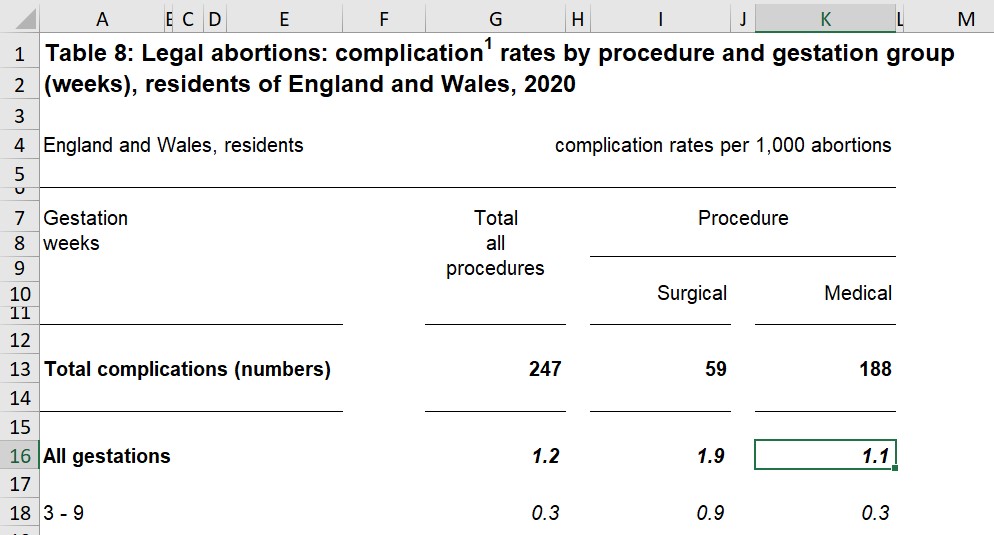
Did you know that the Government and Abortion Providers routinely under report the rate of complications caused by abortion pills? Our freedom of information investigation reveals that less than 1-in-5 complications are being reported. DHSC Under Report. The official DHSC statistics for 2020 show a 1.1% complication rate for all medical abortions and only 0.3%…
-

Medical Abortion Fails 1-in-17 Women.
Medical abortion doesn’t always work; it is well established that MA has an expected treatment failure rate of about 6%. Which means that as many as 1-in-17 pregnant women using abortion pills will subsequently need hospital treatment for complications arising from an incomplete abortion. Ranbaxy (UK) Limited is the manufacturer of Medabon, the mifepristone/misoprostol combination…
-
Six Percent Require Emergency Care.
Gynuity Health Projects, a pro-abortion activist organisation, recently published results from its own study into the safety and efficacy of telemedicine abortion. Two key findings are: Carole Novielli at Live Action, has written a very helpful review of this study here. She says: “If we extrapolate that number out nationally using figures based on Guttmacher…
-

Non-negligible Risk of Failure.
In its SmPC (summaries of product characteristics), Ranbaxy states that there is a non-negligible risk of medical abortion treatment failure, as follows: The non-negligible risk of failure, which occurs in 4.5 to 7.8% of the cases, makes the follow-up visit mandatory in order to check that abortion is complete. The patient should be informed that…
-

Medical Abortion has a 5% failure rate.
Marie Stopes Australia (MSA) says that more than 5% of the medical abortions it provides, fail to complete. Meaning that 1-in-20 women will have fragments of the baby and/or placenta remaining in their womb after taking both sets of the tablets, mifepristone and misoprostol. These women will need to seek further treatment to prevent ongoing…
-

How ‘DIY’ home abortion is placing women at risk.
On 23 March 2021, I presented at an online briefing hosted by the All-Party Parliamentary Pro-Life Group for MPs from across the UK, along with politicians from the Scottish Parliament and Welsh Senedd. This was an opportunity to share some of the findings from our recent freedom of information investigation. Led by Co-Chair of the…
-

Listen to the all of the data, not just some of it.
The Royal College of Obstetricians and Gynaecologists (RCOG) is promoting a new cohort study into the safety, efficacy, and acceptability of telemedicine early medical abortion by Aiken et al. published in BJOG here. RCOG lauds this as the largest data study into telemedicine abortion, whilst the authors caution that there are gaps and possible inconsistencies…
-
Freedom of Information investigation into complications from abortion at home.
In this briefing we bring you three new sets of data about early medical abortion services being provided across England and Wales. Our analysis will help to inform those responding to government consultations, which ask for your views on whether or not the temporary measure introduced during the COVID-19 pandemic, allowing women and girls to…
-
Is the rate of abortion complications falling?
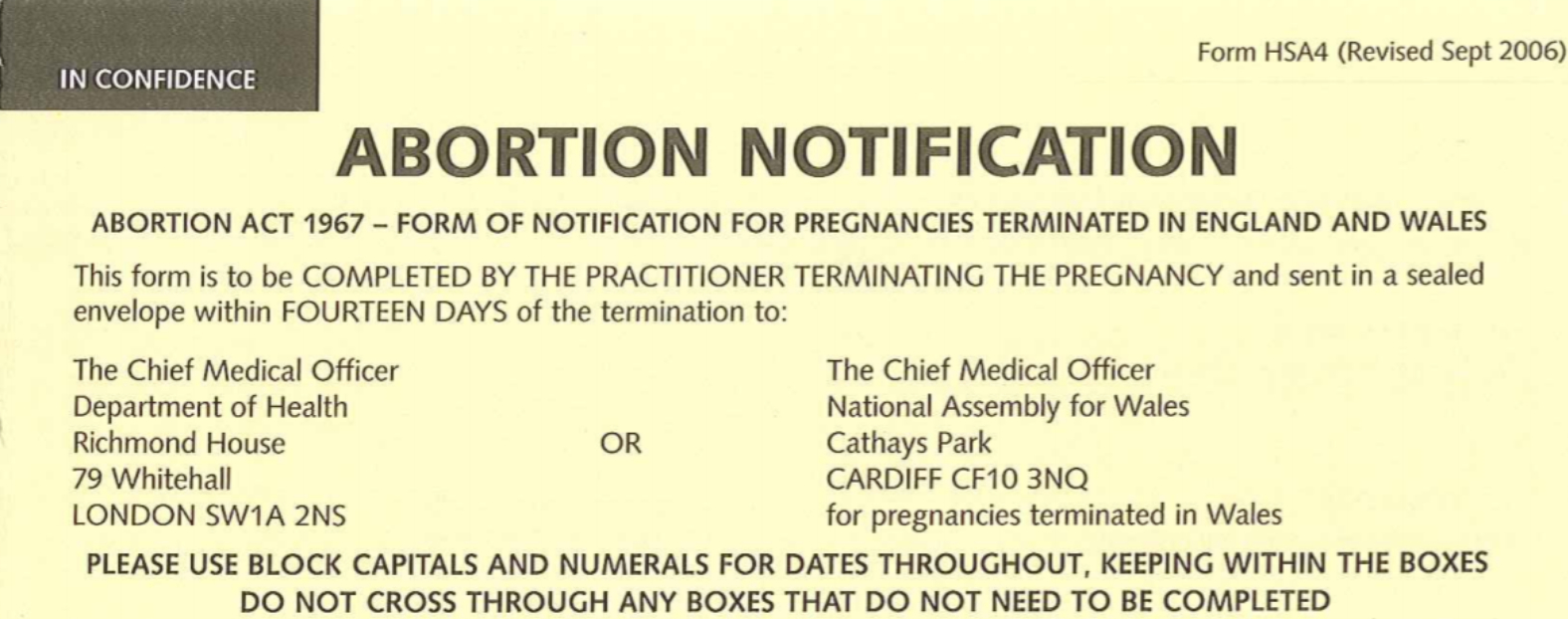
Official government data shows that each year, over 300 women suffer complications from abortion. Statistics from the Department of Health and Social Care for the last five years, shows that each year, 313 women who have an abortion in England and Wales, suffer from complications requiring hospital treatment, including haemorrhage, sepsis, and uterine perforations. This…
