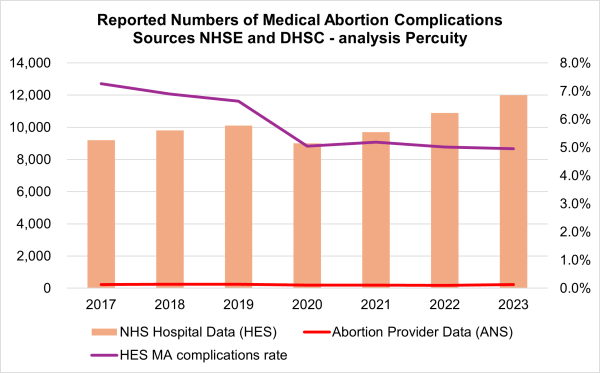
Research organisation Percuity reported that, according to the NHS data, 1-in-17 women who had an abortion at home required hospital care for complications including incomplete abortions, infections, and excessive haemorrhages.

“The government is fully aware of the numbers of women being admitted to hospital for treatment of abortion complications but for some reason seems unwilling to report these on an annual basis,” Duffy wrote. He called for greater transparency and accountability, arguing, “Deliberately minimising and misleading women about the reality of these risks is no... Continue Reading →

54,000 Hospitalized in UK After Injuries From Abortion Pills... Campaigners argue that women cannot give informed consent if the risks are downplayed, and that deliberately minimising these dangers is unacceptable.

Call to allow at-home abortions up to 12 weeks GA

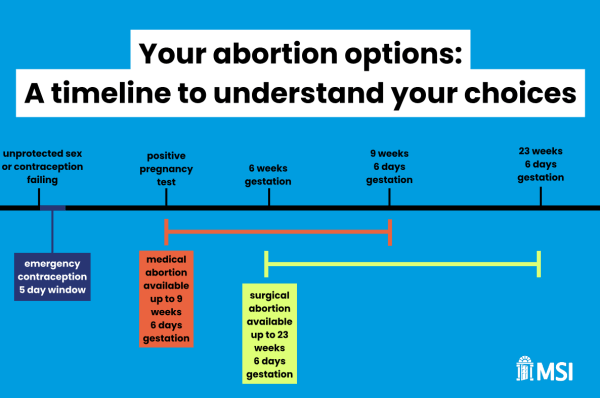
Heidi Stewart, chief executive of the British Pregnancy Advisory Service (BPAS), is urging Parliament to update abortion law to allow women to self-administer medical abortions at home throughout the entire first trimester—raising the current legal limit from 9 weeks and 6 days to 11 weeks and 6 days. She cites a recent study from Scotland,... Continue Reading →

11,000 not 300

In 2022, the most recent year for which we have official reporting of abortion statistics for England, more than 11,000 women were admitted and treated at an NHS hospital for complications arising from a medical abortion;[i] this represents about 6% of those women using mifepristone and misoprostol at home, or misoprostol at home after taking... Continue Reading →

RCOG guidance for later abortions

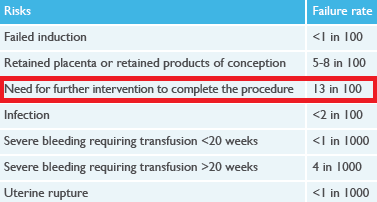
The Royal College of Obstetricians and Gynaecologists has an e-learning module for abortion providers called ‘Making abortion safe’. In the related ‘Medical abortion from 12 weeks of pregnancy: Summary sheet’, it lays out some of the risks that providers need to be aware of for these later-gestation abortions, including a 1-in-7 risk of needing further... Continue Reading →

This is ideology not evidence.

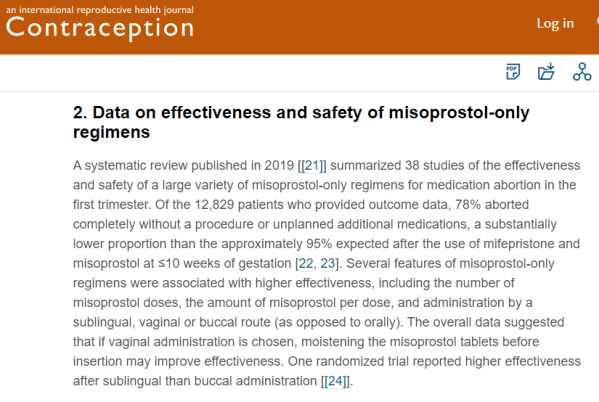
“…misoprostol, can be safely and effectively used on its own.” That’s what MSI Reproductive Choices is telling the public about a medical abortion treatment known to fail once in every five cases. This statement follows a similar one by Dr Grossman, a leading abortion researcher and advocate in the U.S., “What do people need to... Continue Reading →

The Abortion Pill is not always effective.

Medical Abortion (MA), aka the abortion pill, doesn’t always work; it is well-established that MA has an expected and commonly occurring treatment failure rate of about 5%. Meaning that as many as 1-in-20 pregnant women using abortion pills will subsequently need additional medical treatment for complications arising from an incomplete abortion. Medical abortion treatment failure... Continue Reading →

25,000 Reasons Why 95% is Not Good Enough.

New York Times review Research shows that the abortion pill fails in 5% of cases – that’s the findings from a New York Times review of 101 studies covering 124,000 first trimester abortions performed in 26 countries over the last 30 years. Non-negligible risk of failure. It is well-known that medical abortion will sometimes fail,... Continue Reading →

Are Abortion Pills Safe? Here’s the Evidence.

It's not just about ‘safety’ – the abortion pill (mifepristone and misoprostol) is medically safe for the woman; serious complications from medical abortion including hospitalisation, blood transfusion, major surgery, or death are rare. Arguing for changes to the legal and regulatory control of medical abortion solely based on safety is a very weak argument. Now... Continue Reading →

"In the product literature the frequency of side-effects is generally described as above." This is from the British National Formulary at NICE.

Medical Abortion Fails 1-in-17 Women.

Medical abortion doesn't always work; it is well established that MA has an expected treatment failure rate of about 6%. Which means that as many as 1-in-17 pregnant women using abortion pills will subsequently need hospital treatment for complications arising from an incomplete abortion. Ranbaxy (UK) Limited is the manufacturer of Medabon, the mifepristone/misoprostol combination... Continue Reading →

Six Percent Require Emergency Care.

Gynuity Health Projects, a pro-abortion activist organisation, recently published results from its own study into the safety and efficacy of telemedicine abortion. Two key findings are: Six percent of women using abortion pills at home, subsequently needed hospital treatment because of complications related to the abortion, a rate of 1-in-17. Four percent of women using... Continue Reading →

Medical Abortion has a 5% failure rate.

Marie Stopes Australia (MSA) says that more than 5% of the medical abortions it provides, fail to complete. Meaning that 1-in-20 women will have fragments of the baby and/or placenta remaining in their womb after taking both sets of the tablets, mifepristone and misoprostol. These women will need to seek further treatment to prevent ongoing... Continue Reading →

Harm Reduction, a catchy slogan but illegal.

When your global strategy is to promote and enable self-managed medical abortion, even in places in which the national laws prohibit this, then you need catchy slogans to justify your actions to your supporter base. How about these two: Harm reduction.Conscientious provision. In most countries, even in those in which the abortion law is relatively... Continue Reading →

Create a website or blog at WordPress.com

Up ↑