Behind the call for decriminalisation lies a practical reality: providers avoid later‑term medical abortion because of its risks, complexity, and resource demands—yet campaign for women to be legally permitted to attempt these procedures alone at home.
The three organisations spearheading the push for abortion decriminalisation—BPAS, MSI-RC, and RCOG—are pressing to strip away every legal safeguard that might deter women from attempting later‑term self‑managed medical abortions, even though they refuse to provide the same procedure in their own clinics beyond 9 weeks 6 days and fully acknowledge that women at home cannot meet best‑practice standards or follow safe‑care protocols.
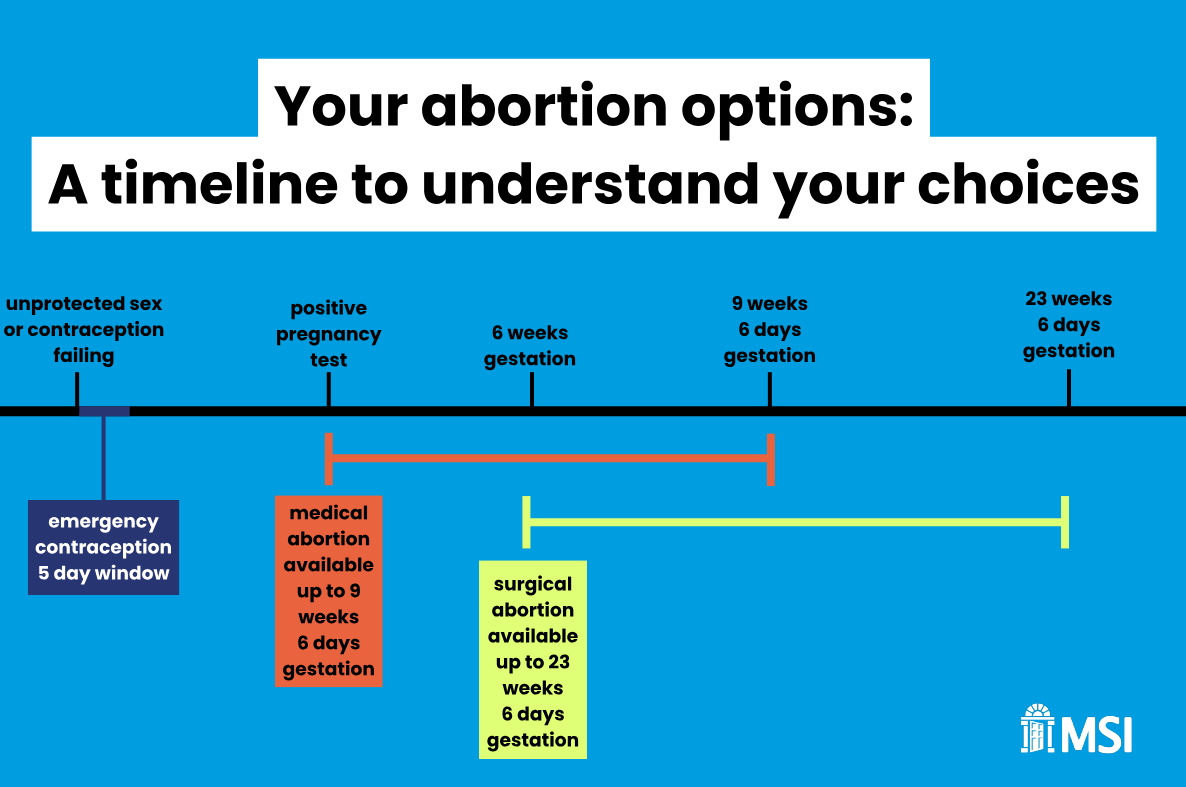
On 16 March, MSI-RC published an article in which it states very clearly that women will not be provided a medical abortion in one of its clinics after a gestational age of 9 weeks 6 days.[1]
More than two years ago, we documented that BPAS had already stopped offering medical abortion as an option after 9 weeks 6 days—despite this breaching the required regulatory standard, RSOP 1. See: Failing to comply with abortion regulation RSOP-1
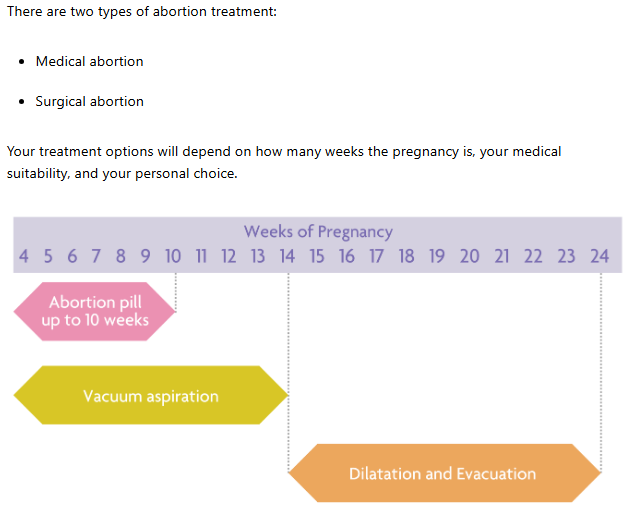
(https://www.bpas.org/abortion-care/abortion-treatments/)
RCOG, meanwhile, has issued detailed guidance for providers on how to perform medical abortions safely after 12 weeks’ gestation.[2] Three points are critical:
- The risk of requiring further medical intervention to complete the abortion is at least 13%.
- The dosage of misoprostol must be reduced at these gestations.
- From 22 weeks, RCOG recommends feticide before administering abortion pills to “avoid [the] fetus being born with signs of life, which can cause distress for women and their care providers.”
There have to be reasons why the executive directors at BPAS and MSI‑RC have chosen not to offer medical abortion after 9 weeks 6 days, after all the alternative surgical procedures require medical staff with additional specialist training—including e.g., the use of feticide—and have a higher operational cost. Reasons will no doubt include the many extra hours it takes for the medical abortion to complete at these later gestations, perhaps much longer than a normal working day at many of their facilities, and/or the need to have a surgical team available to intervene when the medication fails—which it will in more than 13% of all cases.[3] [4]
But whatever the operational reasons, the contradiction remains stark: BPAS and MSI‑RC refuse to provide later‑term medical abortions in their own facilities, yet they are campaigning for women to be legally permitted to attempt the same procedure alone at home. It is a position that shows a troubling disregard for women’s safety and a striking lack of institutional integrity.
[1] MSI Reproductive Choices UK. (2026, March 16). How early can you get an abortion? https://www.msichoices.org.uk/news/how-early-can-you-get-an-abortion/
[2] Duffy, K. (2024, April 24). RCOG guidance for later abortions. Percuity. https://percuity.blog/2024/04/24/rcog-guidance-for-later-abortions/
[3] Duffy, K. (2025, October 10). Call to allow at-home abortions up to 12 weeks GA. Percuity. https://percuity.blog/2025/10/03/call-to-allow-at-home-abortions-up-to-12-weeks-ga/
[4] Duffy, K. (2025, November 4). RCOG guidance for later abortions. Percuity. https://percuity.blog/2024/04/24/rcog-guidance-for-later-abortions/
Discover more from Percuity
Subscribe to get the latest posts sent to your email.

Leave a comment